
The conversation inside the dance
Lead and follow: how two people dance without a script
Watch a good couple at a social and it looks rehearsed. Usually it isn’t. One person is proposing each move and the other is answering, in real time. That’s lead and follow, and it’s the skill that turns steps into dancing.
- Rated 4.9 on Google
- Founded by World and British champions
- Adults only
- No partner needed
Two roles, one dance
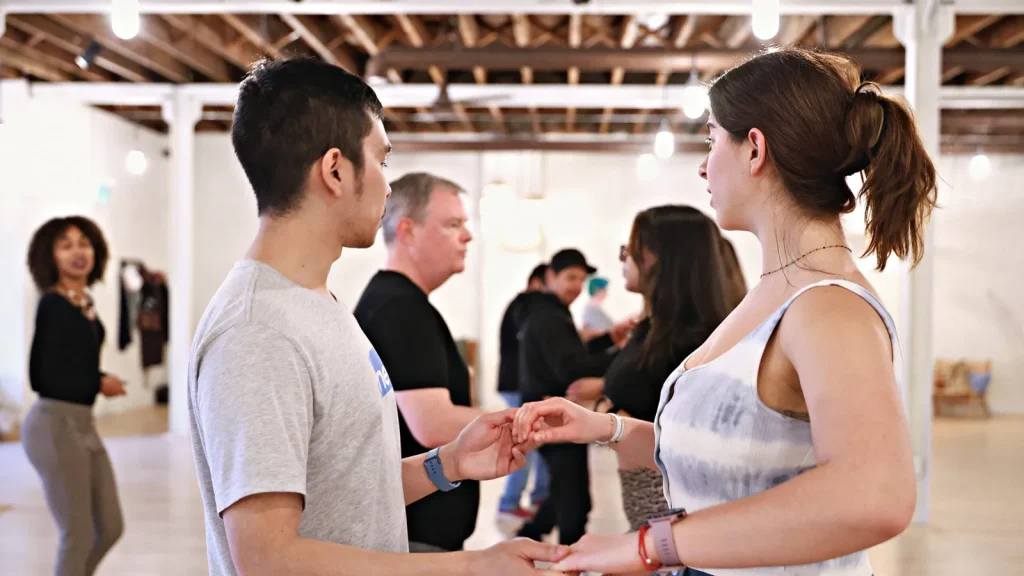
In partner dancing, the lead decides what happens next and signals it, mainly through the body and the connection in the hands and arms. The follow feels that signal and responds. Neither role is passive: a good follow is listening actively and adding their own styling, and a good lead is watching and adapting to their partner.
Lead and follow are roles, not genders. Anyone can learn either, and plenty of dancers learn both.
What each role learns first
Leading
Signal moves a moment before they happen, using your body rather than your arms. Choose moves your partner can do. Keep time.
Following
Keep your own balance and timing, and wait for the signal rather than guessing. It’s harder than it looks to not anticipate.
Both
A consistent connection. It depends on a good dance frame: toned, not tense.
Why it beats memorising steps
A memorised routine only works with one partner and one song. Lead and follow works with anyone, to anything. That’s what lets you walk into a social and dance with strangers, and why partners rotate in beginner classes: you learn the dance rather than one person’s version of it.
It also rescues nervous wedding couples. If you forget a step during a first dance, lead and follow means you can keep dancing anyway. More on that in our page for couples who’ve never danced before.
A good lead makes the follow look good. A good follow makes the lead look clear.
Learn it with a partner who knows it
Lead and follow is taught from the first class at Beach Ballroom. Start with a beginner course, or a private lesson where your coach dances with you in whichever role you’re learning.