
The word you’ll hear in every class
Dance frame: the shape that carries the dance
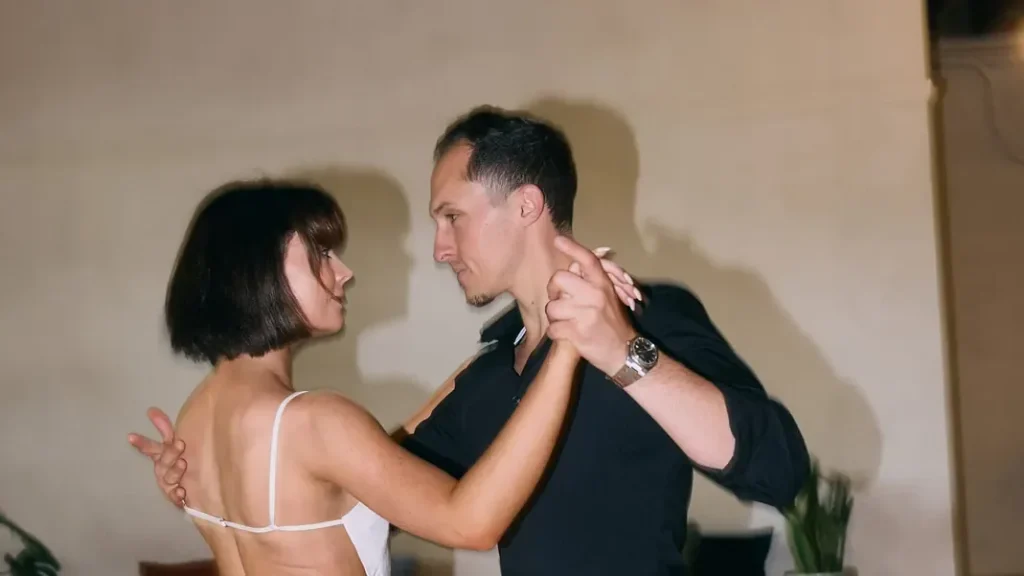
“Keep your frame” is probably the most repeated sentence in any ballroom class. It sounds like posture, and partly it is. Mostly, though, frame is how two people move as one.
- Rated 4.9 on Google
- Founded by World and British champions
- Adults only
- No partner needed
What frame is
Frame is the shape your upper body and arms hold while you dance with a partner. In a closed ballroom hold, both dancers stand tall, shoulders down, arms lifted and toned rather than floppy, with a consistent connection where the hands and arms meet.
Its job is communication. When the lead’s body moves, a good frame carries that movement to the follow without anyone having to push or pull with the hands. A floppy frame loses the message; a rigid one shouts it. You’re aiming for toned, not tense.
Common beginner frame mistakes
Spaghetti arms
Arms that collapse mean the lead’s movement never reaches the follow. The fix is a little more tone from the back, not the hands.
Steering with the hands
Leads often push or pull with their arms. Movement should come from the body, with the frame passing it on.
Shoulders up by the ears
Nerves lift the shoulders. Breathe out and let them drop; the arms stay lifted from the back muscles.
Looking at your feet
Dropping your head pulls the whole frame forward. Eyes up, even when you’re not sure what your feet are doing.
Frame in different styles
Ballroom dances like waltz and foxtrot use the most structured frame, held throughout. Latin and social dances like salsa and bachata use a lighter connection that changes between close and open positions. The principle is the same everywhere: the connection carries the lead, which is why frame and lead and follow are taught together.
At Beach Ballroom, frame, posture and lead and follow are taught from the first ballroom class. Group classes are booked with a class pass, and the waltz is where most adults first put frame to work.
Toned, not tense.
Feel it rather than read it
Frame is much easier to feel than to describe. Join a beginner ballroom class, or book a $99 consultation to work on it one-on-one.