
For the “we can’t dance” couples
A first dance for people who don’t dance
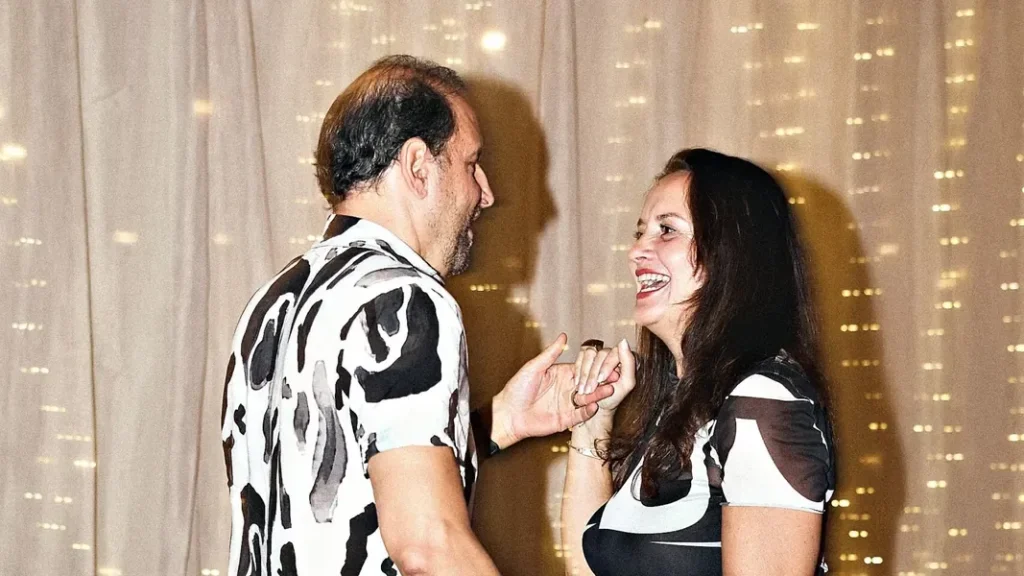
If neither of you has ever danced, you’re in good company. Most of the couples who come to us for a first dance are complete beginners, and plenty arrive with one partner who’d quite like to skip the whole thing. It comes together anyway, and this is how.
- Rated 4.9 on Google
- Founded by World and British champions
- Adults only
- No partner needed
Starting from zero is normal
Nobody expects a wedding couple to look like a competition pair. What guests notice is whether you look happy and comfortable together. That comes from a dance that suits you, not from difficulty.
For most beginners the easiest start is a simple rumba or a slow waltz to a ballad. Both are slow enough to think in, and both look romantic with only a few figures. Your song decides the final style, so bring it along.
When one of you really doesn’t want to
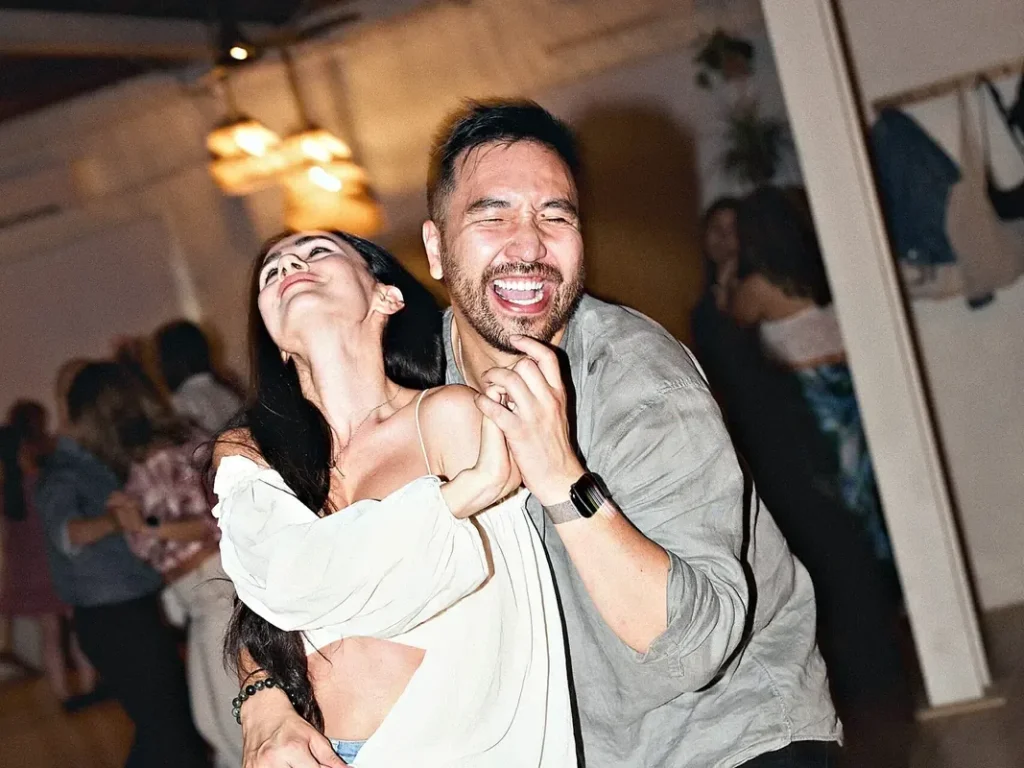
Very often one partner is excited and the other is quietly dreading it. Usually the dread is about being watched, not about dancing. A few things help: keep the dance short, keep the steps simple, and make sure the reluctant partner has a say in the song and the style.
It also helps to know that coaching is relaxed. Lessons go at a pace that suits you both, and the goal is a dance you’ll enjoy, not a performance. Many reluctant partners end up being the ones who want to add a dip.
The goal is to walk off the floor proud, not relieved.
Your safety net if you freeze
The fear behind “we can’t dance” is usually “we’ll forget everything with everyone watching.” Here’s what protects you.
Lead and follow
Learning to lead and follow means you can keep dancing even if you forget a step. One of you guides, the other responds, and the dance carries on.
A short edit
Most first dances run 90 seconds to 2 minutes. Trimming the song shrinks the routine to something you can hold in your head.
A home base
Every routine should include a simple basic step you can return to at any moment. If in doubt, sway, smile and wait for the next musical cue.
How beginners actually get ready
The lessons build foundations first: hold, timing and leading. Then the choreography is added section by section, from your entrance to the ending everyone films. Short practice between lessons matters more than long ones; our guide to practising your first dance at home has a simple routine.
We run wedding lessons one-on-one at our studio on Queen Street East, with packages from 6 to 12 lessons; our page on how many lessons a first dance needs compares them.
Start with a conversation
Book a wedding consultation. We’ll hear your song, see how you move together, and plan something that suits you both.