
Where most ballroom dancers begin
The waltz, counted in three
The waltz is the dance most people mime when they pretend to ballroom dance, and for good reason. It’s elegant, it’s forgiving at a slow pace, and it teaches you almost everything the other ballroom dances need. The mechanics are simpler than they look.
- Rated 4.9 on Google
- Founded by World and British champions
- Adults only
- No partner needed
One, two, three
Waltz music is in 3/4 time: three beats to a bar, with the first one heavier than the other two. Listen to almost any waltz and you’ll hear it, a strong ONE followed by two lighter beats. That pattern is the whole engine of the dance, because you take one step on each beat.
Before you try any steps, sit with a few waltzes and tap the ONE on your knee. It sounds too simple to be worth doing. It’s the single best thing you can do before a first lesson.
The box step, piece by piece
The first thing almost everyone learns is the box step, so named because your feet trace a small square on the floor. Here it is from the lead’s side; the follow does the mirror image, starting back with the right foot.
- Step forward with your left foot on ONE.
- Step to the side with your right foot on two.
- Close your left foot to your right on three, shifting your weight onto it.
- Step back with your right foot on ONE.
- Step to the side with your left foot on two.
- Close your right foot to your left on three. You’re back where you started.
Do it slowly in your kitchen until it stops needing words. The square is a training tool; real waltzing turns it and travels it around the room, but nearly every figure you learn later is built from those six steps.
Rise and fall is what makes it look like waltz
Plenty of beginners can do a box step that looks like someone marching in a square. What turns it into a waltz is rise and fall: you lower softly into the knee on the first step, then rise gradually through the second and third, then lower again. The body floats up and down like a slow wave.
This is where coaching earns its keep. Rise and fall is hard to feel on your own and easy to fake badly, and it depends on posture and frame, which is why our ballroom classes teach frame, posture and lead and follow from day one. Most adults at Beach Ballroom start ballroom with waltz or foxtrot, because they’re slower and teach the foundations every other ballroom dance builds on. Classes are booked with a class pass.
If it feels like you’re floating slightly, you’re doing it right. If you feel taller and shorter in jerks, slow down.
The classic first dance
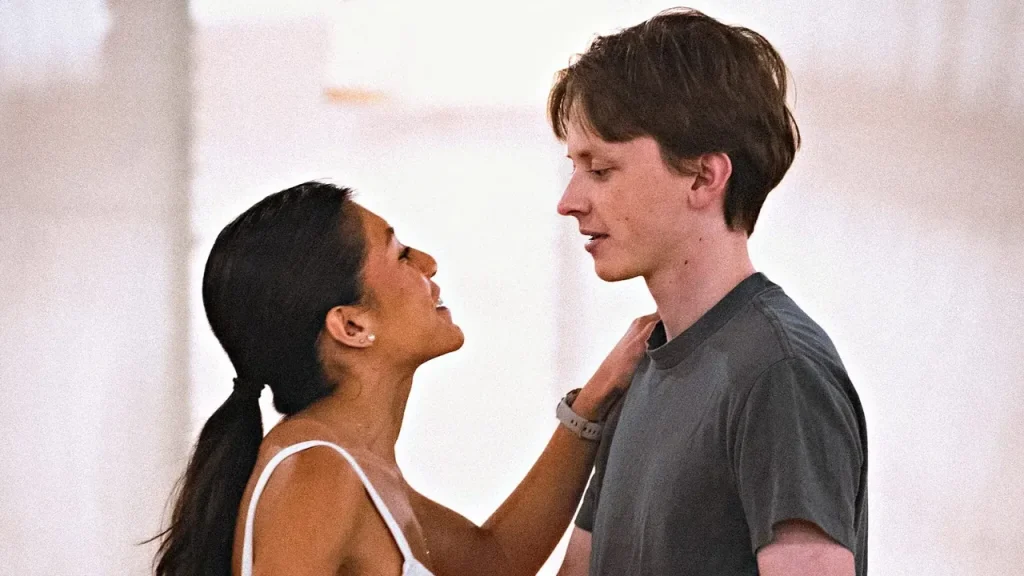
The waltz has been the wedding dance for a very long time, and it still suits plenty of couples: the tempo gives nervous dancers time to breathe, and a simple turning waltz looks lovely in a long dress. If your song has that ONE-two-three feel, you’re halfway there already.
We teach first dances one-on-one, built around your song and your date. Our wedding dance planning guide walks through it, from song to dress rehearsal.
Waltz questions
What’s the difference between waltz and Viennese waltz?
Speed and rotation. The Viennese waltz is the fast, turning version and is much harder to start with. Our page on the Viennese waltz explains how it differs.
How long does it take to learn to waltz?
It depends on how often you dance. The box step usually makes sense in a first class; rise and fall takes a good deal longer to feel natural.
What music can I waltz to?
Anything in 3/4 time, where you can count ONE-two-three: classic waltzes, and plenty of slower modern songs with that lilt.
Your first waltz
Brand new? A class pass gets you into a beginner-friendly ballroom class. Danced before, or want a plan? Book a $99 consultation with a senior coach.