
One name, two dances
Tango dance: pick your tango
Say “tango” and people picture a rose in someone’s teeth. In practice there are two tangos you can learn as an adult, and they feel almost nothing alike. Knowing which is which saves you a confusing first class.
- Rated 4.9 on Google
- Founded by World and British champions
- Adults only
- No partner needed
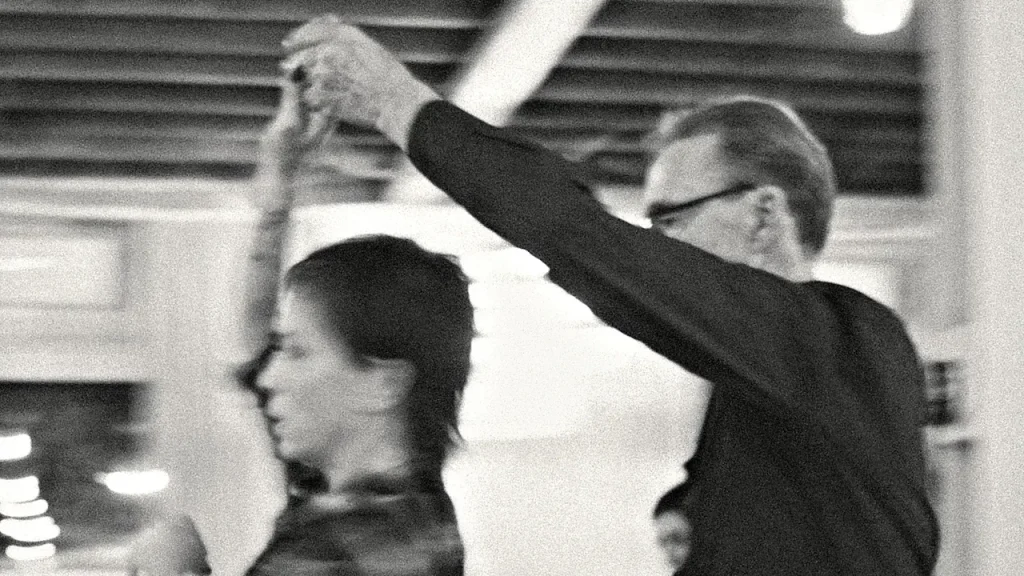
Ballroom tango and Argentine tango, side by side
Ballroom tango
One of the five ballroom dances. It travels around the floor in a compact closed hold, with quick head turns and crisp, clipped movement. Unlike waltz or foxtrot, there’s no rise and fall: you stay grounded the whole time.
Argentine tango
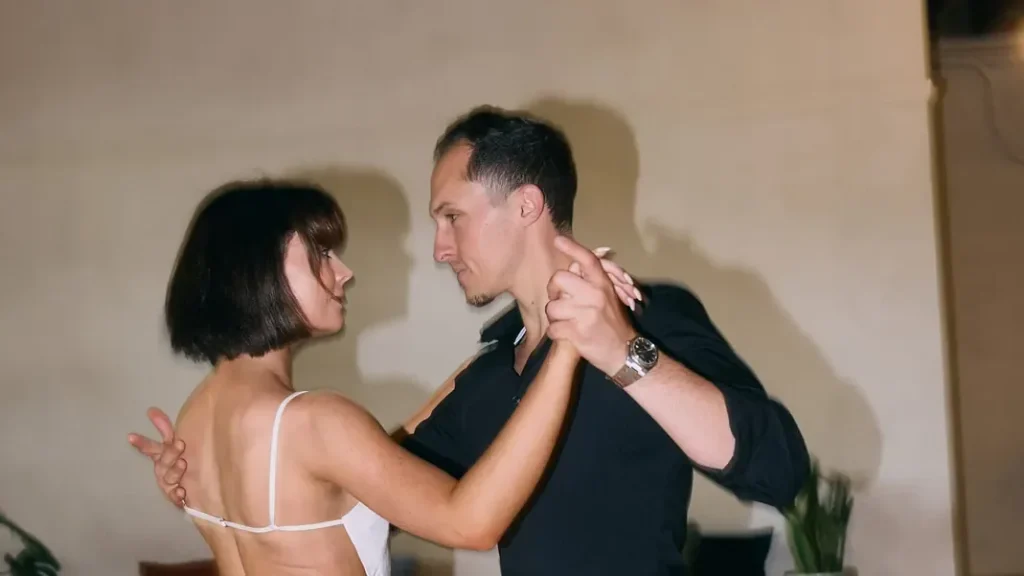
The original, from the dance halls of Buenos Aires and Montevideo. It’s built on walking in an embrace and improvised from moment to moment, with the lead and follow listening to each other rather than running set figures.
Same name, shared ancestry, very different experiences on the floor.
What ballroom tango feels like to learn
Most people are surprised by how still ballroom tango is between the sharp moments. You walk with knees softly bent and feet that stay close to the floor, then a staccato action snaps you into the next shape. The drama comes from contrast: slow, slow, then suddenly quick.
The head movements are the part beginners love and overdo. In class they come late, once the walk and the frame are steady, because a snap of the head without a solid frame just looks like you heard a noise.
If you’ve already done a little waltz, tango will feel like taking the rise and fall away and replacing it with attitude. If you haven’t, that’s fine too. Plenty of adults start ballroom with tango simply because it’s the one they wanted.
Learning tango at Beach Ballroom
Ballroom tango is part of our ballroom program, taught by a team that has competed at World and British level and founded by two-time World Champion Richard and British Champion Laura. Group classes are added as groups fill and are booked with a 5, 10 or 20 class pass.
Argentine tango is taught by Kosta & Ilinca, mostly one-on-one. We’ve written a separate page on starting Argentine tango in Toronto if that’s the one calling you.
Tango questions we hear a lot
Which tango is easier for a beginner?
Neither is easy, but they’re hard in different ways. Ballroom tango gives you set figures to learn, which some people find reassuring. Argentine tango gives you a simpler vocabulary but asks you to improvise sooner.
Can I learn tango without a partner?
Yes. Partners rotate in group classes, and in private lessons your coach dances with you.
Is tango a good wedding first dance?
It can be, if you love the drama. Many couples choose something gentler like a waltz or rumba, and a coach can blend a few tango moments into a simpler routine.
What shoes should I wear?
Something with a smooth sole that lets you pivot. Grippy running shoes make tango’s quick turns hard on your knees.
Not sure which tango is yours?
Book a 45-minute consultation with a senior coach for $99. You’ll try a little of what interests you and leave with a clear recommendation for your next step.