
The practical side of a first dance
Dancing in your wedding dress, without surprises
You can rehearse a first dance perfectly in leggings and still get caught out on the day by a train, a bustle or brand-new shoes. A few simple precautions make the difference between a dress you dance in and a dress you dance around.
- Rated 4.9 on Google
- Founded by World and British champions
- Adults only
- No partner needed
What different dresses mean for your dance
Long trains
A train trailing behind you will catch feet on any turn. Ask your seamstress about a bustle you can fasten quickly after the ceremony, or plan a wrist loop.
Full skirts
Big skirts hide footwork and take up room. Your partner needs to stand slightly to the side rather than toe to toe, and turns need a little more space.
Fitted and mermaid styles
A narrow skirt limits stride length. Smaller steps and gentle sways look elegant; big lunges and deep dips may not be possible.
Jumpsuits and short dresses
If you’re planning a more energetic routine, these give you the most range of movement.
Shoes matter more than the dress
Brand-new soles are slippery on some floors and sticky on others, and they’re often stiffer than you expect. Wear your wedding shoes around the house for a few evenings before the day, and if possible on a hard floor.
Heels change your balance and your partner’s hold. If you’re planning turns or dips, practise them in the same heel height you’ll wear. Some brides change into flatter shoes for the reception. If that’s you, rehearse in those instead.
Toronto weddings in winter add one more wrinkle: if you’re coming in from outside, make sure the soles are dry before you step onto the dance floor.
Rehearse in the shoes, not just the steps.
A dress rehearsal is worth it
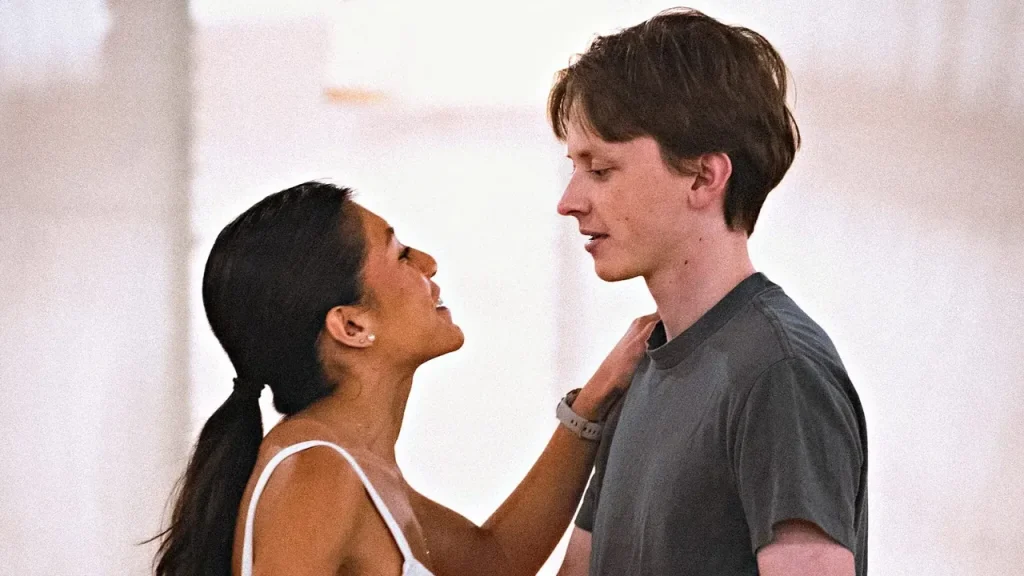
At Beach Ballroom, our wedding choreography ends with a dress rehearsal: you practise in your wedding shoes so the day feels familiar. If you can, bring a skirt similar in length and width to your dress, or even the dress itself if your fitting schedule allows.
It’s the moment couples discover that a turn needs an extra beat, or that a planned dip needs to change. If you’re weighing a big move, our page on dips and lifts covers what’s realistic. Our wedding dance planning guide covers the rest, step by step.
A quick home check
Before your last lesson, run the dance once at home in your shoes and a similar skirt. Watch for three things: the train or hem near the floor on turns, your partner’s feet near your skirt, and whether your hand can find the bustle loop without looking. Our guide to practising your first dance at home has more on making the most of short sessions.
Dance in the dress you love
Book a wedding consultation. Tell us about your dress and shoes, and we’ll shape the choreography around them.